Italian perfume history: Florence, Calabria and eau de cologne
Italian perfume history runs through Florence, where Dominican friars founded the Santa Maria Novella pharmacy, officially born in 1612. Catherine de' Medici's perfumer was the Florentine René Bianco. More than 90% of the world's bergamot comes from Calabria, and Giovanni Maria Farina, credited with eau de cologne in 1709, was an Italian immigrant.
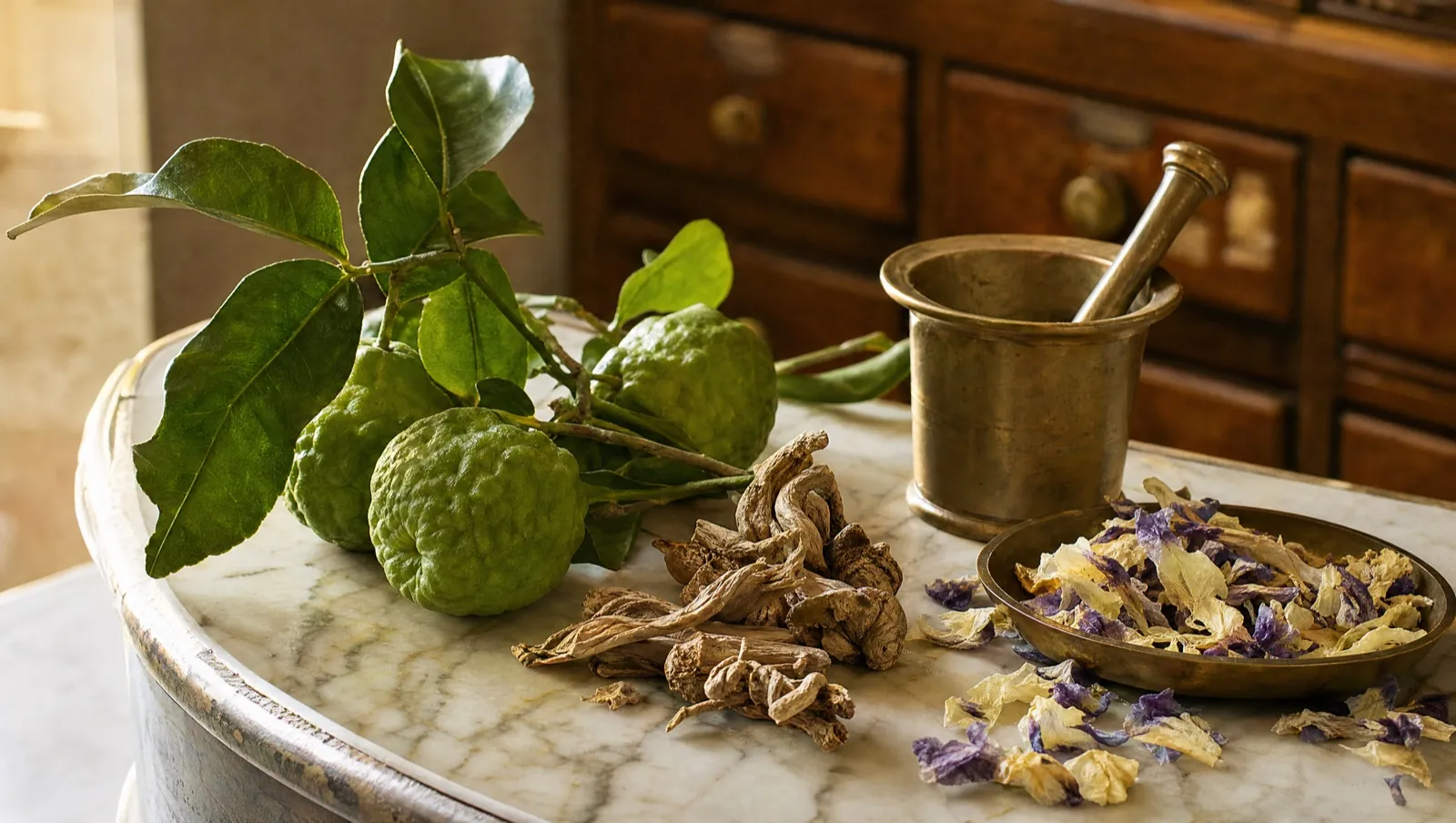
The Museo Galileo describes the Santa Maria Novella pharmacy in Florence as one of the oldest pharmacies still operating in the world.[1]
Santa Maria Novella in Florence
Dominican friars created the pharmacy in the first half of the 13th century, according to the Museo Galileo.[1] The first records of its fragrance and perfume production date from 1381.[1] The pharmacy was officially born in 1612, on the suggestion of the Grand Duke of Tuscany.[1]
In the 18th century it began to export its products, made from the friars’ formulas, as far as India and China.[2] In 1866 its last proprietor, Damiano Bensi, sold it to his nephew Augusto Stefani, ancestor of the present owners.[2]
The pharmacy’s own history dates its roots to 1221, when Dominican friars founded the convent of Santa Maria Novella.[4] It says the friars distilled rose water in the decades of the Black Death, and gives 1381 as the first evidence of its scented waters.[3] It calls 1612 the conventional start of its activity, open to the public and relatively independent from the convent.[5]
Catherine de’ Medici and René le Florentin
The Santa Maria Novella pharmacy says that when Catherine de’ Medici left Florence in 1533 to marry the future king of France, she asked for a perfumer.[6] It names him Renato Bianco, known in Paris as René le Florentin.[6] The pharmacy also presents its Acqua della Regina as a tribute to an essence Catherine commissioned for that wedding.[7]
Historian Robert Knecht, in his 1998 biography of the queen, also calls René Bianco her Florentine perfumer.[8]
Historians report the poisoning story as an allegation and an accusation.[8][10] Nancy Roelker’s biography of Jeanne d’Albret, queen of Navarre, says René Bianco sold Jeanne a pair of perfumed gloves, a regular extravagance of hers, during her last shopping trip.[9] Knecht writes that René had allegedly sold her some lethal gloves.[8] In a note, historian Vincent Pitts writes that three authors he cites accuse René of poisoning Jeanne.[10]
The image also appears in fiction. In Alexandre Dumas’s novel Queen Margot, René combines the functions of perfumer and poisoner to the queen mother.[11]
Bergamot from Calabria
Bergamot trees are cultivated almost exclusively along the southern coast of Calabria, according to a 2015 review in Frontiers in Pharmacology.[12] More than 90% of the world’s bergamot comes from that region.[12]
The plant’s origins are still uncertain.[13] It may be native to Calabria, or it may come from the Antilles, Greece or the Canary Islands.[13] The name “bergamot” seems to derive from Berga, a Spanish city from which the plant later reached Calabria.[13]
How bergamot oil is pressed, and why its use on sun-exposed skin is restricted, is covered on the citrus perfume page.
The Italians behind eau de cologne
The Farina fragrance museum in Cologne says Johann Maria Farina invented the original eau de cologne there in 1709.[14] The museum adds that the perfume reminded him of an Italian spring morning after the rain.[14] A Baedeker guide to Cologne calls him Giovanni Maria Farina (1685–1766), an Italian immigrant.[15]
The Pro Loco of Santa Maria Maggiore, on its pages for the Casa del Profumo Feminis-Farina, names Giovanni Paolo Feminis as the inventor of the original formula and Farina as the man who sold it.[16] Both men, they say, were born in the Valle Vigezzo.[16]
According to the same pages, Feminis (1660–1736) left home very young for Germany, where he opened a distillery.[17] Among his products was Aqua mirabilis, which became eau de cologne, and its medicinal properties were certified in 1727.[17]
The eau de cologne glossary entry explains the style’s strength and its citrus profile. The France page follows perfume in Grasse and Paris, and the history of perfume covers the story from Mesopotamia to modern synthetics.
Questions
Did Catherine de' Medici have an Italian perfumer?
Yes. Historian Robert Knecht names René Bianco as her Florentine perfumer. The Santa Maria Novella pharmacy says Catherine asked for a perfumer to join her when she left Florence in 1533. Knecht reports as an allegation the story that René sold Jeanne d'Albret lethal gloves.
How old is the Santa Maria Novella pharmacy in Florence?
The Museo Galileo says Dominican friars created it in the first half of the 13th century. The first records of its fragrance and perfume production date from 1381, and the pharmacy was officially born in 1612.
Was eau de cologne invented by an Italian?
The Farina museum in Cologne says Johann Maria Farina invented it there in 1709, and a Baedeker guide calls him an Italian immigrant. The Pro Loco of Santa Maria Maggiore, on its Casa del Profumo pages, credits Giovanni Paolo Feminis with the formula and Farina with selling it, and say both were born in the Valle Vigezzo.
Sources
- Officina Profumo Farmaceutica di Santa Maria Novella [Perfume and Pharmaceutical Works of Santa Maria Novella], Museo Galileo, 2008.
- Officina Profumo Farmaceutica di Santa Maria Novella [Perfume and Pharmaceutical Works of Santa Maria Novella], Museo Galileo, 2008.
- A story that began in 1221, Officina Profumo-Farmaceutica di Santa Maria Novella.
- A story that began in 1221, Officina Profumo-Farmaceutica di Santa Maria Novella.
- A story that began in 1221, Officina Profumo-Farmaceutica di Santa Maria Novella.
- A story that began in 1221, Officina Profumo-Farmaceutica di Santa Maria Novella.
- A story that began in 1221, Officina Profumo-Farmaceutica di Santa Maria Novella.
- Catherine de' Medici, Longman, 1998.
- Queen of Navarre: Jeanne d'Albret, 1528-1572, Belknap Press of Harvard University Press, 1968.
- Henri IV of France: His Reign and Age, Johns Hopkins University Press, 2009.
- Queen Margot (English translation), Methuen, 1904.
- Citrus bergamia essential oil: from basic research to clinical application, Frontiers in Pharmacology, 2015. DOI: 10.3389/fphar.2015.00036.
- Citrus bergamia essential oil: from basic research to clinical application, Frontiers in Pharmacology, 2015. DOI: 10.3389/fphar.2015.00036.
- Farina Fragrance Museum, Farina 1709.
- Cologne (Baedeker guide), Baedeker, 2012.
- The history of Eau de Cologne, Pro Loco Santa Maria Maggiore (Casa del Profumo Feminis-Farina).
- The history of Eau de Cologne, Pro Loco Santa Maria Maggiore (Casa del Profumo Feminis-Farina).