
Perfume for rainy days and the smell of rain
In Esquire India, perfumer Rajiv Seth and Secret Alchemist co-founder Ankita Thadani suggest fresh scents over sweet or heavy ones for damp monsoon weather, with notes such as vetiver, citrus, aromatic herbs or cedarwood. For the smell of rain itself, mitti attar is distilled from baked clay, and some perfumes use petrichor notes or a rain accord.
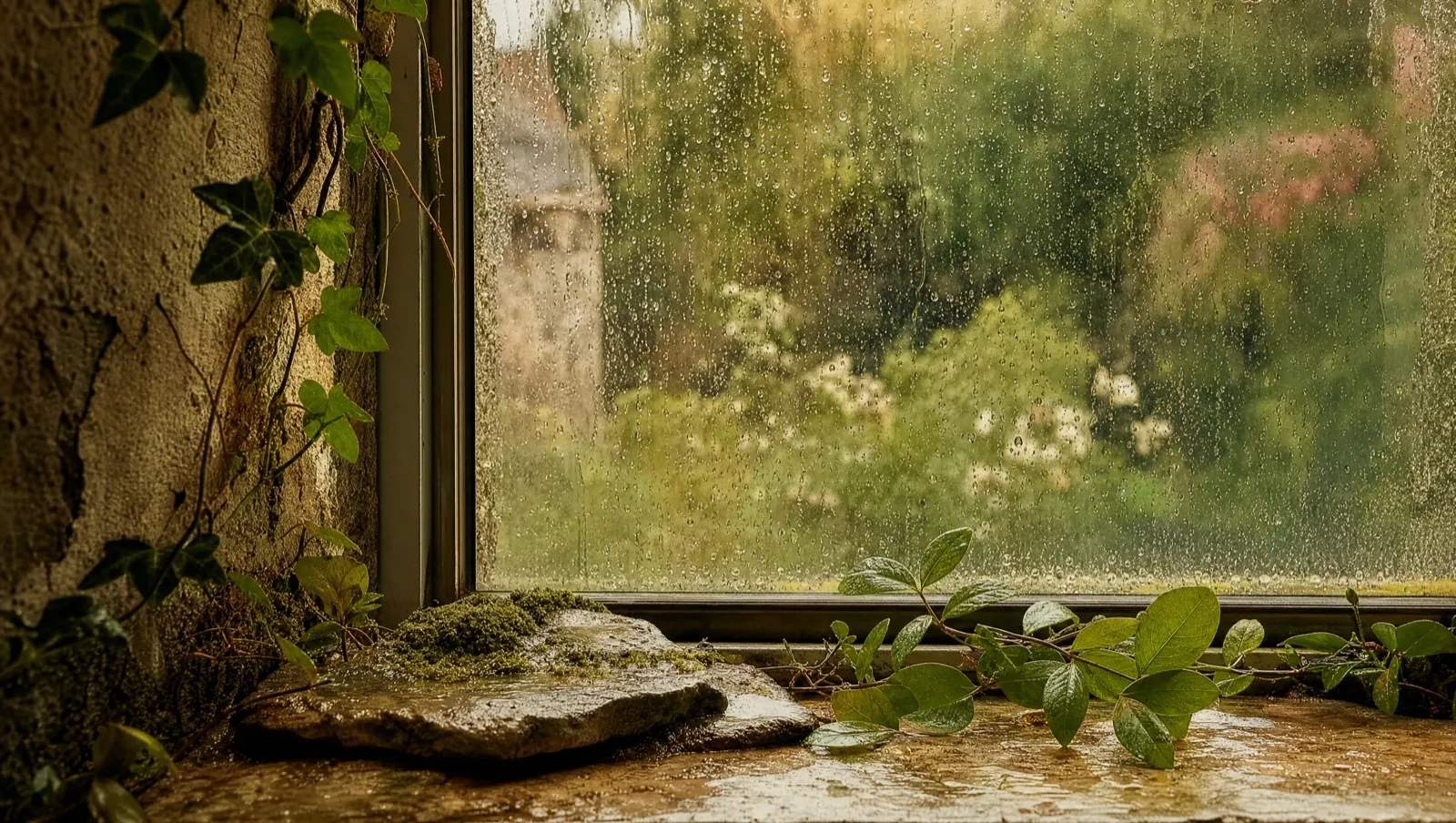
When rain wets dry soil after a long drought, the soil releases a distinctive scent called petrichor.[1]
Where the word petrichor comes from
Two CSIRO scientists, Isabel (Joy) Bear and Richard Thomas, first described petrichor in a paper published in Nature on 7 March 1964.[2] Its opening line, as CSIRO quotes it, notes that many dry clays and soils give off a characteristic odour when breathed on or moistened with water.[3]
According to CSIRO, the pair steam-distilled rocks left out in warm, dry conditions and found a yellowish oil that was responsible for the smell.[4] The oil was trapped in rock and soil and released by moisture.[4] They proposed the name petrichor for the odour, an “ichor” or “tenuous essence” derived from rock or stone.[5] The word joins the Greek petra, meaning stone, and ichor, the fluid of the gods.[1]
In 1965, Bear and Thomas reported that substances accompanying the odour slowed seed germination and early plant growth instead of speeding them up.[6]
Geosmin, the earthy note
Researchers now describe petrichor as a blend of volatile organic compounds, typically associated with geosmin and 2-methylisoborneol made by bacteria such as Actinomycetota.[1] A 2026 study measured soils along an aridity gradient that reaches into the Negev Desert.[7] In those soils, petrichor consisted of 58 volatile compounds, and their release showed a pronounced initial burst.[8]
The bulk of geosmin is attributed to microorganisms found mainly on land, such as soil-borne Actinomycetes.[9] People detect it at low levels: in water, the threshold is 4 to 10 nanograms per litre, about one teaspoon in 200 Olympic swimming pools.[10] Its earthy note may add a fresh scent to perfumes, at least at low concentrations, a 2024 paper notes.[11]
Perfumes that imitate rain
CSIRO notes that a small perfumery industry in India had captured the scent in sandalwood oil before science described it.[12] It was called “matti ka attar”, or earth perfume.[12]
In Kannauj, Abhishek Tripathi runs an attar business that his family started in 1872.[13] He told ELLE India that mitti attar is made from baked clay and smells exactly like the first rains hitting dry earth.[14] The clay comes from the banks of the Ganga and is dried and baked in kilns, he says.[15] It is then distilled into sandalwood oil.[16]
Modern perfumes take other routes. Woman & Home says Issey Miyake’s A Drop D’Issey has a specifically formulated rain accord that gives a dewy, marine-like quality to lilac and sandalwood.[17] The same article reports that Le Labo’s Baie 19 was inspired by petrichor and the ozone in the air.[18]
Isaac Lekach is co-founder and perfumer of Flower Shop Perfumes.[19] Playing off the magic of a fall rainstorm, The Daily Beast reports, he has seen a rise in earthy compositions with notes like petrichor, asphalt and even mushroom.[20]
What perfumers suggest for rainy days
The advice below comes from two founders of fragrance brands quoted in the press, not from lab studies.
Rajiv Seth, founder and perfumer at All Good Scents, suggests scents that feel fresh, clean and breathable but still have some structure.[21] He told Esquire India that very sweet, heavy or dense perfumes can become cloying in damp, humid weather.[22]
Purely watery scents can disappear quickly in humidity, Seth says, so they work better with citrus, aromatic herbs, spices, vetiver, cedarwood, patchouli or clean musks.[23] In his view, earthy and woody facets connect with the smell of rain and wet ground.[23]
Ankita Thadani, co-founder of Secret Alchemist, also suggests fresh, balanced scents over sweet or heavy ones.[24] She recommends notes such as vetiver, bergamot, lemon, aromatic herbs and lavender.[25]
How weather changes the way perfume evaporates from skin is a separate question, covered in how temperature changes perfume.
Questions
What is the smell of rain called?
Petrichor. Isabel Bear and Richard Thomas proposed the name in Nature in 1964. It joins the Greek petra, meaning stone, and ichor, the fluid of the gods, and names the scent dry soils release when they are wetted after a long drought.
What causes the smell of rain?
According to CSIRO, Bear and Thomas traced it to a yellowish oil trapped in rock and soil and released by moisture. Researchers now describe petrichor as a blend of volatile compounds, typically associated with geosmin and 2-methylisoborneol made by bacteria.
Is there a perfume that smells like rain?
Mitti attar from Kannauj, India, is made from baked clay distilled into sandalwood oil. Abhishek Tripathi, whose family makes it, told ELLE India it smells exactly like the first rains hitting dry earth. Some modern perfumes use a rain accord or petrichor notes.
Sources
- Dryland Soil Rewetting Induces Strong Volatile Organic Compound Emissions With Potential to Form Ozone and Aerosols, Global Change Biology, 2026. DOI: 10.1111/gcb.71145.
- The smell of rain: how our scientists invented a new word, CSIRO, 2015.
- The smell of rain: how our scientists invented a new word, CSIRO, 2015.
- The smell of rain: how our scientists invented a new word, CSIRO, 2015.
- The smell of rain: how our scientists invented a new word, CSIRO, 2015.
- Petrichor and Plant Growth, Nature, 1965. DOI: 10.1038/2071415a0.
- Dryland Soil Rewetting Induces Strong Volatile Organic Compound Emissions With Potential to Form Ozone and Aerosols, Global Change Biology, 2026. DOI: 10.1111/gcb.71145.
- Dryland Soil Rewetting Induces Strong Volatile Organic Compound Emissions With Potential to Form Ozone and Aerosols, Global Change Biology, 2026. DOI: 10.1111/gcb.71145.
- Geosmin, a Food- and Water-Deteriorating Sesquiterpenoid and Ambivalent Semiochemical, Activates Evolutionary Conserved Receptor OR11A1, Journal of Agricultural and Food Chemistry, 2024. DOI: 10.1021/acs.jafc.4c01515.
- Geosmin, a Food- and Water-Deteriorating Sesquiterpenoid and Ambivalent Semiochemical, Activates Evolutionary Conserved Receptor OR11A1, Journal of Agricultural and Food Chemistry, 2024. DOI: 10.1021/acs.jafc.4c01515.
- Geosmin, a Food- and Water-Deteriorating Sesquiterpenoid and Ambivalent Semiochemical, Activates Evolutionary Conserved Receptor OR11A1, Journal of Agricultural and Food Chemistry, 2024. DOI: 10.1021/acs.jafc.4c01515.
- The smell of rain: how our scientists invented a new word, CSIRO, 2015.
- Inside A 100-Year-Old Attar Factory In Kannauj, That’s Bottling The Scent Of Rain, ELLE India, 2025.
- Inside A 100-Year-Old Attar Factory In Kannauj, That’s Bottling The Scent Of Rain, ELLE India, 2025.
- Inside A 100-Year-Old Attar Factory In Kannauj, That’s Bottling The Scent Of Rain, ELLE India, 2025.
- Inside A 100-Year-Old Attar Factory In Kannauj, That’s Bottling The Scent Of Rain, ELLE India, 2025.
- Like the air after a downpour, these rainy perfumes are fresh, earthy and seriously autumnal, Woman & Home, 2026.
- Like the air after a downpour, these rainy perfumes are fresh, earthy and seriously autumnal, Woman & Home, 2026.
- The 6 Biggest Fragrance Trends for Fall 2026, The Daily Beast, 2026.
- The 6 Biggest Fragrance Trends for Fall 2026, The Daily Beast, 2026.
- The Lowdown On The Best Perfumes For Monsoon, Esquire India, 2026.
- The Lowdown On The Best Perfumes For Monsoon, Esquire India, 2026.
- The Lowdown On The Best Perfumes For Monsoon, Esquire India, 2026.
- The Lowdown On The Best Perfumes For Monsoon, Esquire India, 2026.
- The Lowdown On The Best Perfumes For Monsoon, Esquire India, 2026.